
History of Maple Park and 920 Geneva Street
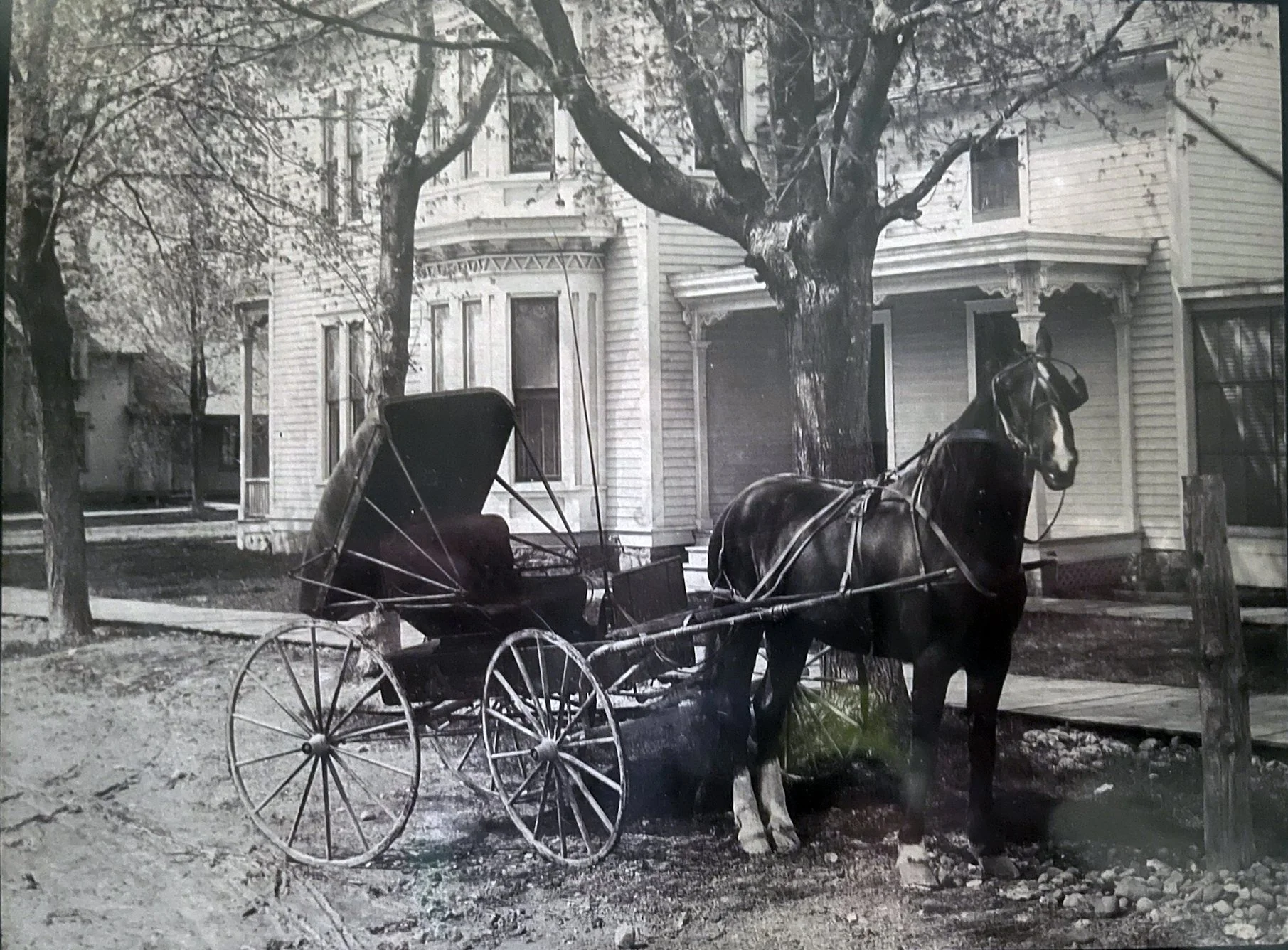
Maple Park, Corner of Geneva St. & Warren St, Circa 1870
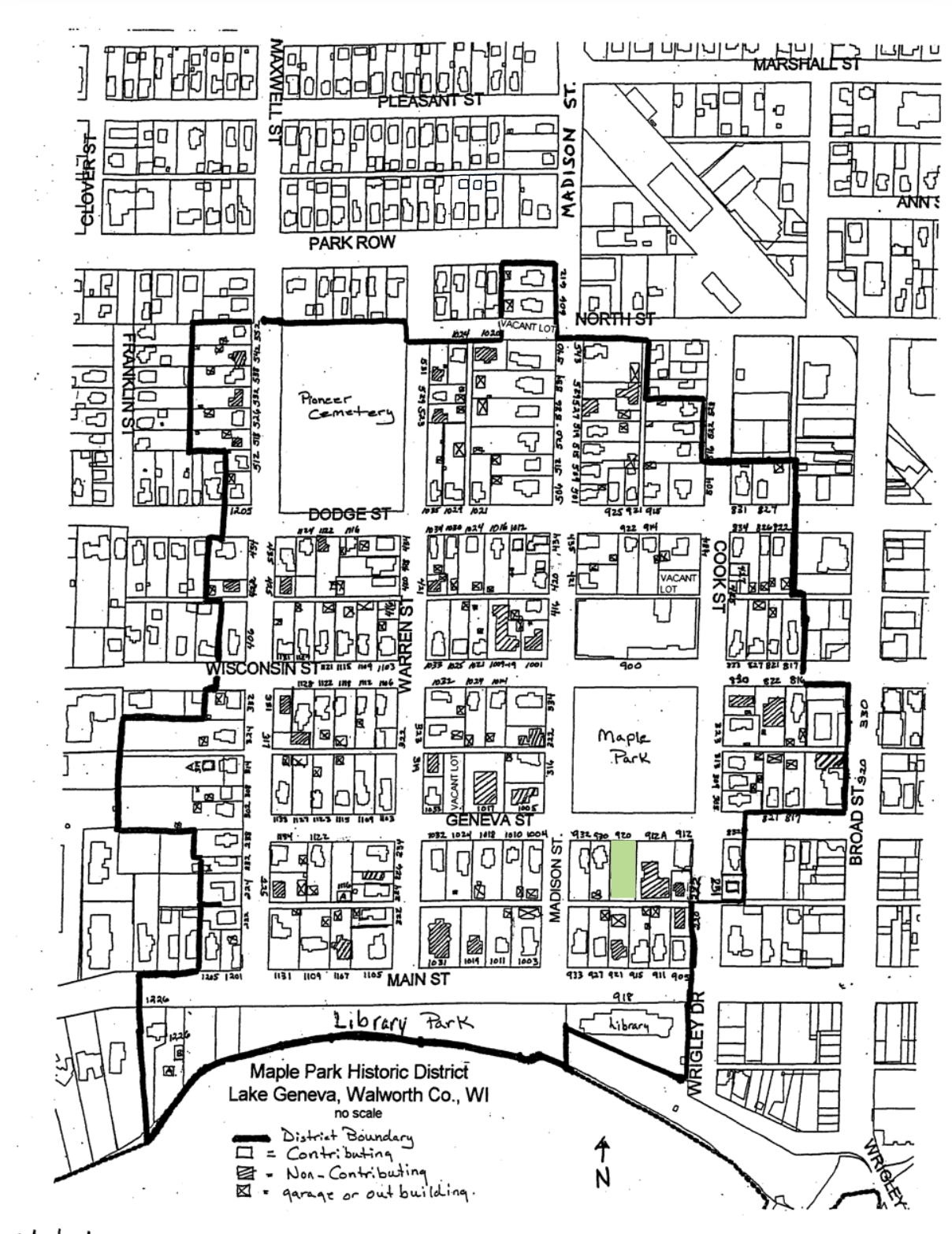
Known as the House of Seven Gables, 920 Geneva Street was built circa 1870 (with records suggesting construction was completed around 1873) for Mr. and Mrs. James Fiske. The home rose in the years just after the Civil War and the Great Chicago Fire of 1871, a period that reshaped Lake Geneva as wealthy Chicago families flocked north to build their summer homes. The home sits in Maple Park, originally known as Central Park, a neighborhood with its own deep roots in Lake Geneva's founding story.
The square itself goes back to the very beginning of the town. When Thomas McKaig drew up the original plat of Lake Geneva in 1837, he set this land aside as a public common, following the New England tradition the area's Yankee settlers brought with them. A neighborhood eventually grew up around that reserved green space, and it's remained the heart of the district ever since.
According to records from the Wisconsin Historical Society and the National Register of Historic Places, the oldest homes in the area went up in the late 1840s and 1850s, mostly in the Greek Revival and Italianate styles favored by the town's earliest settlers, largely middle and upper-middle class families. Everything changed after the Civil War. Lake Geneva became a go-to summer escape for well-off Chicago families, and the Great Chicago Fire only sped things up further. Wealthier buyers meant bigger, more ornate houses started replacing the modest early ones, and the House of Seven Gables was very much a product of that shift.
While a handful of homes in the district trace back to those first decades, most of what stands today was built between 1870 and 1920, with the busiest stretch landing in the final twenty years of the 1800s and the first ten of the 1900s. By then, Maple Park had cemented its reputation as Lake Geneva's most sought-after address, and 920 Geneva Street stood right at the center of that story.
920 Geneva Street - Excerpts from the National Historic Registry for Historic Places:
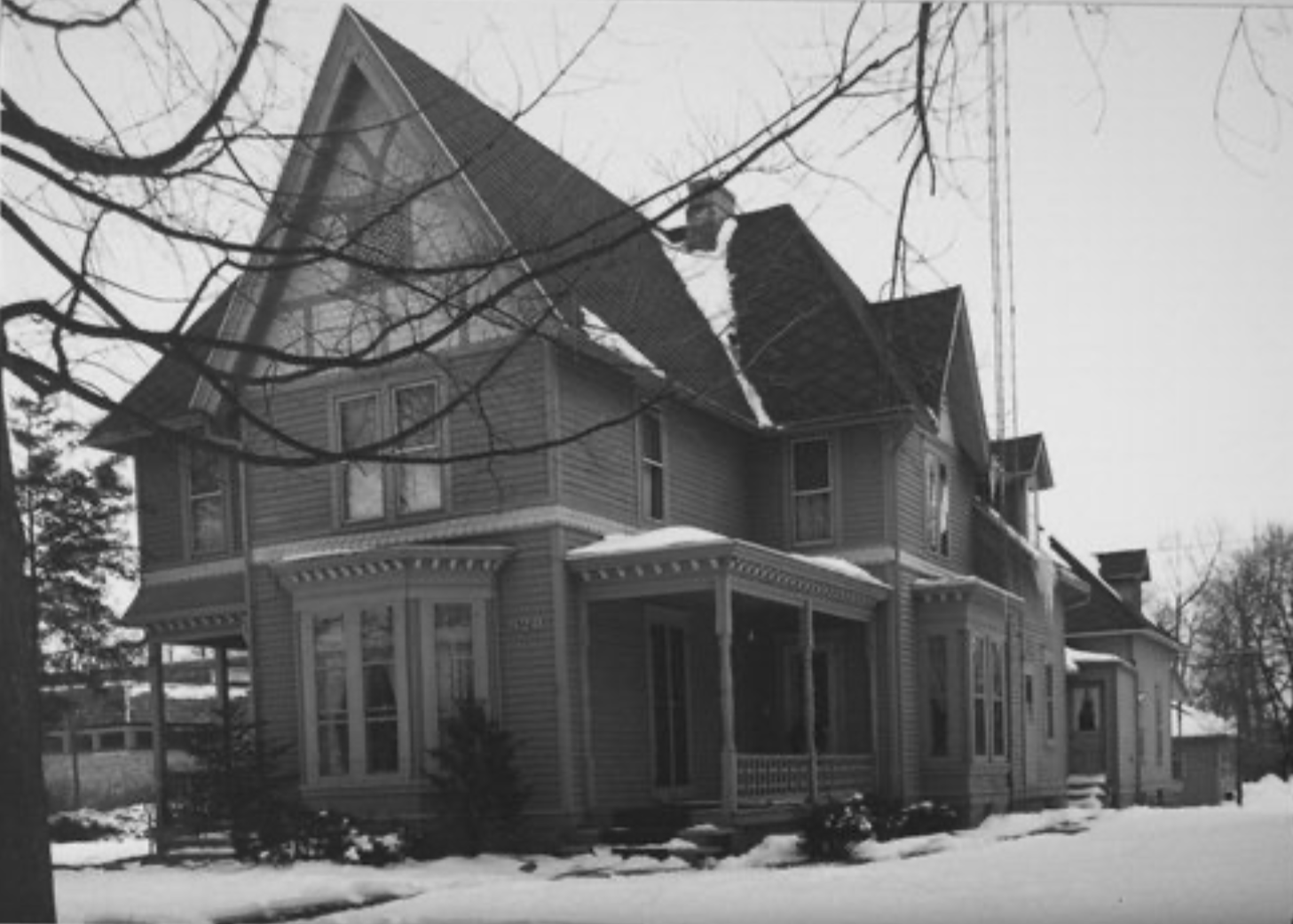
920 Geneva Street: Circa 1920s
Built circa 1870 by James and Mrs. Fiske, 920 Geneva Street is one of Lake Geneva's most historically significant homes and the only known example of Eastlake style architecture in the city. Originally known as the "House of Seven Gables," the home has grown beautifully over the years and with the additions, it has gained a few more gables along the way.
The home is registered as Queen Anne in style, which refers to the architecture itself, with the asymmetrical facade, the varied and irregular rooflines, the distinctive tower, and the wonderful mix of textures across the exterior that give Victorian homes of this era their unmistakable character. Layered on top of that is the Eastlake influence, named for English designer Charles Eastlake, who championed a highly ornamental approach to woodwork that feels more like fine furniture than construction. Think intricate hand-carved and lathe-turned details, elaborate spindle work, and geometric patterns chiseled into the wood with exceptional craftsmanship. The two work beautifully together, and the result is something you really have to see in person. There is nothing else like it in Lake Geneva.
Mrs. Fiske was a piano teacher, and the home was thoughtfully designed with her passion in mind. The living room and parlor feature gorgeous curved eleven-foot ceilings, built specifically to enhance the acoustics for music. Mr. Fiske, a writer and scholar of American history, had a private study added to the rear of the home so he had a quiet place to work and think.
Over the years the home has passed through the hands of many proud owners, each serving as a steward of its legacy and contributing their own chapter to its story. And through every one of those chapters, its soul has remained intact. The hand-turned banisters, intricate moldings, doors, pocket doors, and leaded glass are all still here, just as they were more than a century ago. While the home has been thoughtfully updated over the years, it has never lost its original charm or the craftsmanship that makes it unlike anything else in Lake Geneva.
More than 140 years later, this one-of-a-kind piece of Lake Geneva history is ready for its next chapter.
References: "Victorian Home Finally has 'Children of its Own'" Lake Geneva Regional News 8-5-1976. A Walking Tour of Olde Lake Geneva Towne by the Lake Geneva Plaque and Walking Tour Commission, Spring 1993. A Walking Tour of Lake Geneva, WI, Lake Geneva Historic Preservation Commission, 2015; National Register of Historic Places, Wikipedia.